
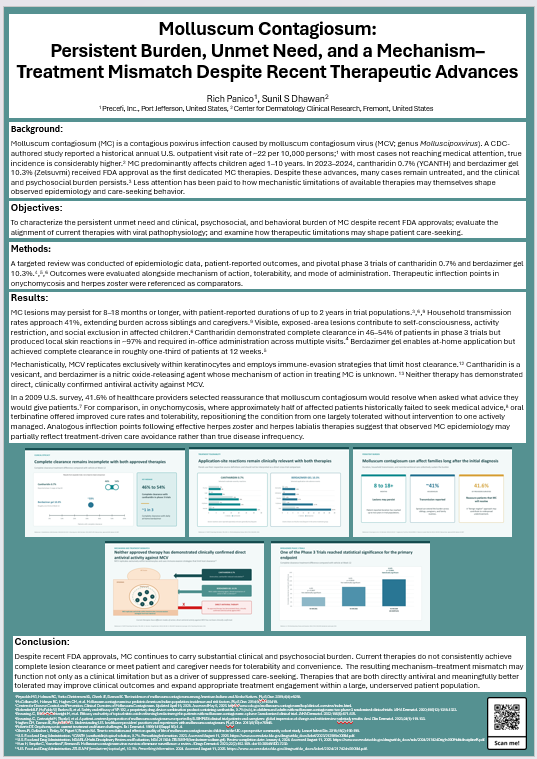
Precefi was proud to present new research at the European Academy of Dermatology and Venereology (EADV) Congress 2026 in Vienna. The ePoster, “Molluscum Contagiosum: Persistent Burden, Unmet Need, and a Mechanism–Treatment Mismatch Despite Recent Therapeutic Advances,” was authored by Rich Panico, CEO and Co-Founder of Precefi, and Dr. Sunil S. Dhawan of the Center for Dermatology Clinical Research in Fremont, California.
Molluscum contagiosum is a common viral skin infection that mainly affects children. Even with two FDA-approved therapies now available, many cases go untreated, and lesions can last 18 months or longer, often spreading to siblings and other household members.
The poster reviews epidemiologic data, patient-reported outcomes, and the pivotal phase 3 trials of cantharidin 0.7% and berdazimer gel 10.3%. It highlights a gap between how the virus behaves and how current treatments work: neither therapy has shown direct antiviral activity against the molluscum virus, and both come with trade-offs in clearance rates, tolerability, or convenience. Drawing comparisons to onychomycosis and herpes zoster, the authors suggest that the limits of current treatments may be keeping families from seeking care, meaning the true burden of the disease may be larger than it appears.
The work points to a clear opportunity: therapies that are directly antiviral and better tolerated could improve outcomes for a large, underserved patient population. This reflects Precefi’s commitment to advancing dermatology research and to identifying where new clinical trials can make the greatest difference for patients.